🔥 Limited Spots: 40-Hour Proof of Concept for $2,500 | Tokyo 🇯🇵 & Delhi 🇮🇳 Offices | Claim Your Spot →



In today’s global economy, brands no longer exist in one cultural space. Businesses expand across borders, audiences become multilingual, and identity must travel beyond geography.
Yet many brands struggle when entering new markets—not because their products are weak, but because their branding does not adapt.
Building a cross-cultural brand is not about removing identity.
It is about designing identity that travels.
For Japan–India collaboration, this challenge is especially important. These two nations share strong economic and cultural ties—but their communication styles, aesthetics, and expectations differ significantly.
Here is a practical guide to building a cross-cultural brand that works in both worlds.
1. Start With Core Identity, Not Visual Trends
Before adapting to another culture, define what does not change.
Ask:
- What is our core purpose?
- What values define us?
- What emotional message do we want to deliver?
Your core identity must remain stable.
Culture influences presentation—not purpose.
Without clear identity, cross-cultural adaptation becomes inconsistent and confusing.
2. Understand Cultural Design Expectations
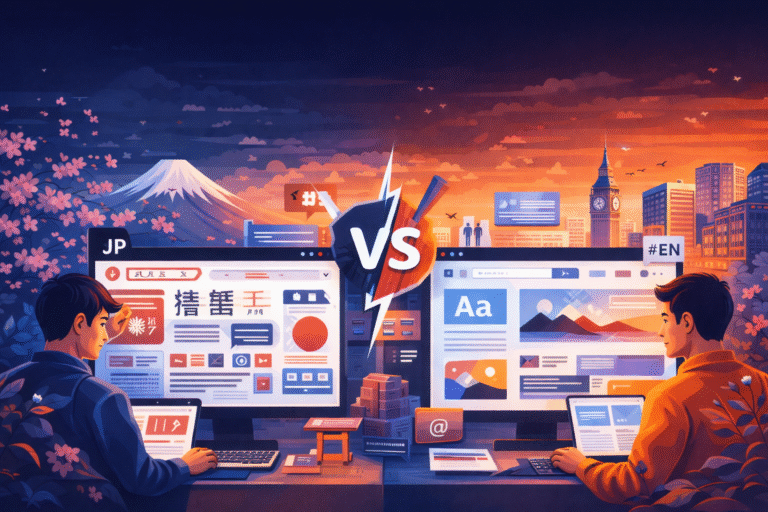
Japan and India approach visual communication differently.
In Japan:
- Clean layouts are preferred
- White space signals sophistication
- Typography clarity matters deeply
- Structure builds trust
In India:
- Expressive visuals are common
- Bold colors are culturally rich
- Storytelling is emotional and dynamic
- Celebration influences design language
A strong cross-cultural brand blends:
- Japanese clarity
- Indian vibrancy
The key is balance—not dominance.
3. Adapt Tone Without Losing Personality
Language is one of the most sensitive cross-cultural elements.
In Japan:
- Communication tends to be polite and structured
- Direct aggressive sales language is avoided
- Trust-building tone is valued
In India:
- Messaging may be more energetic and persuasive
- Story-driven narratives are common
When building bilingual or cross-border branding:
- Adjust tone while keeping personality
- Respect cultural communication norms
- Avoid literal translation without context
Localization should feel natural—not forced.
4. Design for Dual Audiences
Cross-cultural brands must serve multiple audiences simultaneously.
Consider:
- Separate landing pages per language
- Adapted visual hierarchy
- Cultural references adjusted thoughtfully
- SEO strategies customized per region
Your brand must feel local in each market while maintaining global consistency.
This requires strategic design systems—not one-size-fits-all layouts.
5. Use Cultural Symbols Carefully
Cultural symbols are powerful—but sensitive.
For Japan–India branding, common elements might include:
- Cherry blossoms
- Mandalas
- Traditional patterns
- Festival colors
These should be:
- Used subtly
- Integrated professionally
- Avoided if stereotypical
Authenticity builds respect. Overuse weakens credibility.
6. Maintain Visual Consistency Across Markets
While adaptation is important, consistency is essential.
Maintain:
- Same logo structure
- Core color palette
- Typography system
- Visual tone
This ensures recognition.
A brand that looks completely different in each market loses strength.
Cross-cultural branding is adaptation within structure—not reinvention.
7. Build Community, Not Just Market Share
Cross-cultural brands succeed when they:
- Participate in local events
- Support cultural initiatives
- Collaborate with communities
- Engage in meaningful partnerships
Community involvement increases trust faster than promotional campaigns.
In Japan especially, presence and relationship-building matter deeply.
8. Align Branding With Long-Term Strategy
Cross-cultural branding is not short-term marketing.
It is:
- Long-term positioning
- Strategic expansion
- Identity evolution
Brands entering Japan should prepare for:
- Gradual trust-building
- Structured communication
- Consistent brand presence
Patience strengthens positioning.
9. Invest in Professional Design Systems
Cross-cultural identity requires structured brand systems:
- Logo guidelines
- Color standards
- Typography rules
- Usage policies
- Digital templates
Without systems, branding becomes inconsistent across languages and markets.
Structured design systems create stability.
10. Think Experience, Not Just Appearance
Branding is not limited to logos and websites.
It includes:
- Event presence
- Packaging
- Social media
- Customer communication
- Environmental design
Cross-cultural brands must ensure that every touchpoint reflects harmony and professionalism.
Experience defines perception.
Why Cross-Cultural Branding Matters More in 2026
As Japan and India deepen collaboration in:
- Technology
- Infrastructure
- Education
- Cultural exchange
The need for culturally intelligent branding will increase.
Brands that understand both markets will:
- Gain competitive advantage
- Build stronger partnerships
- Reduce miscommunication
- Increase long-term loyalty
Cross-cultural intelligence is becoming a business asset.
Final Thoughts
Building a cross-cultural brand is not about choosing between identities.
It is about designing a system that respects both.
Successful Japan–India brands:
- Maintain core purpose
- Adapt visual presentation
- Balance structure with creativity
- Communicate respectfully
- Think long-term
When done thoughtfully, cross-cultural branding becomes more than marketing—it becomes a bridge.